
How to Prevent Honeybee Colony Loss

Last Updated: November 21, 2026
Quick Summary
To prevent honeybee colony loss, inspect hives on a set schedule, monitor Varroa mites monthly in season, keep food stores ahead of dearth, reduce pesticide exposure, replace failing queens early, and prep winter stores by late summer. Treat mites when counts pass your local threshold and rotate treatment types to avoid resistance.
Preliminary 2025-2026 survey results put managed colony loss at 39.9% from April 2025 to April 2026.
Backyard beekeepers lost 54.8% of colonies versus 38.7% for commercial operations.
Monitor with a sugar roll or alcohol wash every 30 days during brood rearing.
Late-summer and autumn brood rearing decides winter survival, so weak colonies fail regardless of January syrup.
Reduce pesticide exposure by discussing spray timing with neighbors and avoiding midday applications near bloom.
Ready to protect your hives?
That Crazy Bee Guy offers starter kits, hive tools, and expert guidance for healthier colonies.
Table of Contents
Build a Colony Loss Prevention Plan
Preliminary results from the 2025-2026 U.S. Beekeeping Survey put managed colony loss at 39.9% from April 2025 to April 2026, with a confidence interval of 30.1% to 53.1% (Preliminary Results from the 2025-2026 US Beekeeping Survey(https://apiaryinspectors.org/US-beekeeping-survey-25-26)). Learning how to prevent honeybee colony loss starts with one habit: check the hive before you assume it is fine.
Colony loss is the death or collapse of a managed honey bee colony. Backyard beekeepers lost 54.8% of colonies versus 38.7% for commercial operations, so management and monitoring matter.
Inspect on a set schedule, monitor Varroa monthly in season, keep food stores ahead of dearth, reduce pesticide exposure, replace failing queens early, and prep winter stores by late summer. New to this? The beekeeping starter kit for beginners covers which equipment to buy first, and the beginner beekeeping protective clothing guide covers what to wear before you open a colony.
Varroa Mite Treatment for Honey Bees
Varroa mites are the single most consistent threat in colony health guidance, and treating them is the core of how to prevent honeybee colony loss. UF/IFAS Extension recommends an integrated pest management approach for Varroa control to limit bee exposure to harsh treatments (UF/IFAS colony health guidance(https://sfyl.ifas.ufl.edu/agriculture/colony-collapse-disorder/)).
A 2026 outlook advises monitoring mite populations more vigilantly during the season (Honeybee Health: A 2025 Retrospective and 2026 Outlook(https://www.sacvalleyorchards.com/almonds/honeybee-health-a-2025-retrospective-and-2026-outlook/)). In practice, that means monthly counts, not guesswork: monitor with a sugar roll or alcohol wash every 30 days during brood rearing, treat when counts pass your local threshold, rotate treatment types to avoid resistance, and recheck with a follow-up wash.
One tool we stock is a green deep wax coated plastic drone frame and foundation, which manages mite reproduction by giving Varroa a trap brood frame.
Varroa control follows a simple monitoring-and-treatment cycle through the brood-rearing season.
Step | What to do | Frequency |
Monitor | Sugar roll or alcohol wash | Every 30 days during brood rearing |
Treat | Treat when counts pass local threshold | When threshold is passed |
Rotate | Rotate treatment types to avoid resistance | Each treatment cycle |
Recheck | Follow-up wash after treatment | After treating |
Use a Honey Bee Hive Inspection Checklist

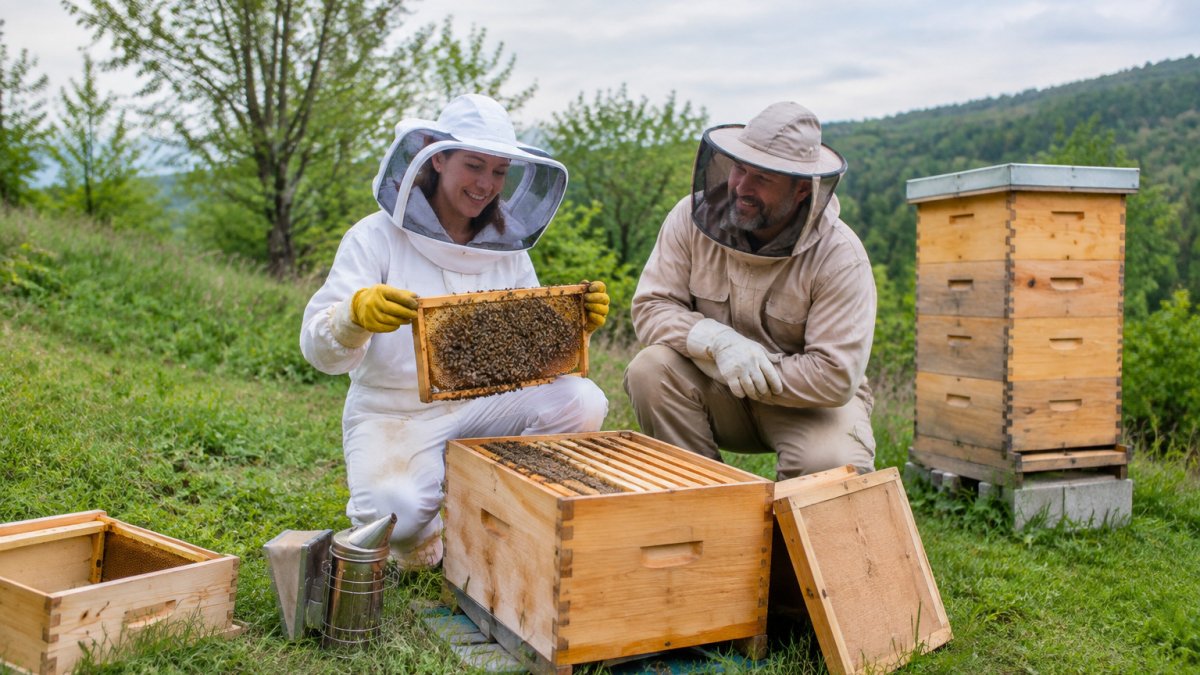
Note the date, weather, and time; check colony strength and look for the queen or fresh eggs; scan brood for an even laying pattern; check honey and pollen stores; count mites or set a sticky board; look for disease signs; confirm ventilation and remove burr comb. Two tools make this faster: a stainless 9" hive tool pries boxes apart and loosens frames, and a frame grip with frame manipulation tool lifts frames without crushing bees.
Feed Honey Bees in Winter
Late-summer and autumn brood rearing decides winter survival; a colony entering winter with weak stores and too few nurse bees will not make it, no matter how much syrup you pour on in January.
Other Causes of Colony Decline
Colony Collapse Disorder is not a catch-all. The EPA describes CCD as a specific pattern where most worker bees disappear while the queen, food, and a few nurse bees remain (EPA on Colony Collapse Disorder(https://www.epa.gov/pollinator-protection/colony-collapse-disorder)). Many losses do not fit that pattern, so do not blame CCD for every dead hive.
Penn State research links colony loss to multiple stressors at once, including nearby pesticides, mites, and extreme weather (Penn State colony loss research(https://www.psu.edu/news/eberly-college-science/story/honey-bee-colony-loss-us-linked-mites-extreme-weather-pesticides)). A peer-reviewed review also ties losses to colony survival, beekeeper education, and disease control (Factors Associated with Honey Bee Colony Losses(https://pmc.ncbi.nlm.nih.gov/articles/PMC7712510/)).
Reduce pesticide exposure by talking with neighbors about spray timing and avoiding midday applications near bloom, keep forage close, and replace failing queens early, because queen health drives brood rearing and colony strength.
Colony loss is not a mystery you solve once. It is a habit you keep, season after season. That Crazy Bee Guy helps beekeepers build that habit with starter kits, hive tools, wax-dipped hives, and guidance from a USDA Apiary Inspector in Ohio. Get started with That Crazy Bee Guy and give your colonies a better shot at winter survival.
Frequently Asked Questions
What causes honey bee colony collapse?
Colony collapse disorder is a specific pattern where most worker bees disappear while the queen, food, and a few nurse bees remain, according to the EPA. It is not a catch-all explanation for every dead hive. Penn State research links colony loss to multiple stressors, including Varroa mites, nearby pesticides, and extreme weather. That is why a prevention plan addresses parasites, chemical exposure, and forage together rather than blaming one cause.
How often should I inspect a honey bee colony?
Inspect regularly during the active season so you can catch a failing queen, a mite buildup, or a swarm before it happens. A honey bee hive inspection checklist keeps each visit focused: check brood pattern, food stores, queen presence, and mite counts. In winter, skip full inspections and only check weight and entrance activity. Frequent, purposeful inspections are one of the simplest ways to prevent honeybee colony loss.
How do Varroa mites contribute to honey bee colony losses?
Varroa mites feed on bees and spread viruses that shorten worker lifespan and weaken winter survival. UF/IFAS Extension recommends an integrated pest management approach for Varroa control to limit bee exposure to harsh treatments. Monitor mite levels regularly, treat when counts cross your threshold, and rotate treatment types. A 2026 outlook advises beekeepers to monitor mite populations more vigilantly during the season, since mites remain a leading stressor behind colony loss.


Comments